For the past 20 years or more, Walter Brueggemann has been known for his theological exegesis. In his many books and articles, he has been looking at the Bible as a theological document showing us what God is doing throughout history. In Sabbath as Resistance. Saying NO to the CULTURE OF NOW, Brueggemann writes about God’s people in the context of the cultures around them. He points out that the Bible has a distinct message and a different theology than the cultures in which God’s people find themselves. He compares Israel’s early Old Testament situation to the cultures the disciples lived in according to New Testament stories and incidents, and then to our situation in our cultures today.
Published by WestminsterJohnKnox, and available at www.wjkbooks.com, Brueggemann has more than 20 books with WJK. In this one, Chapter One is on Sabbath and the First Commandment, and in the next five chapters, he discusses resistance to anxiety, coercion, exclusivism, and multitasking (all concerns that sound familiar), and offers alternative ideas, followed by a final chapter on Sabbath and the Tenth Commandment.
It looks like people of both the Old and New Testaments had some of the same problems we are coping with today. And what did they do about it? And what should we do about our situation? Two of his key words are resistance and alternative, as he explains how the celebration of Sabbath can be an act of both resistance and alternative. Think of your own situation: is there tension in the family over resisting requirements of soccer practice on the Sabbath, for example?
Brueggemann says his book is for those who are feeling “weary and heavy laden,” because of the many requirements of our culture. He assures us that keeping the Sabbath is both resistance and alternative to the demands of advertising and the commercialism surrounding us. He is beginning to think the fourth commandment on the Sabbath “is the most difficult and most urgent of the commandments in our society.”
I like the way Brueggemann brings together God’s people in both the Old Testament and the New, with our current times. He combines essential portions of the teachings of both Moses and Jesus, with references to Scripture and the Psalms, reminding us “do not be anxious....God provides what is needed.” As he says, Brueggemann’s book offers readers “a journey from the world of commodity to the world of communion.” Recalling an old hymn, he urges us to “take time...Sabbath is taking time...to be holy.”
—Lois Sibley
Friday, May 30, 2014
Friday, May 16, 2014
A Bio for the BCP
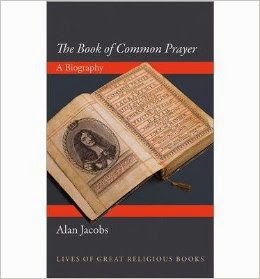
The Book of Common Prayer A Biography sounds like a book many of us would like to read. Written by Alan Jacobs, who is a professor at Baylor University in Texas and published by Princeton University Press at press.princeton.edu, this is part of their series called LIVES OF GREAT RELIGIOUS BOOKS. I didn't realize a book could have a bio, but this one has so much history packed around it that it needs a bio.
The story begins in 1543, with Archbishop Thomas Cranmer sitting in his study, looking around at his vast collection of books and thinking about how he might produce in English a book that would please not only King Henry VIII, whose moods were “hard to predict,” but would also be helpful to the people in the pews. Many of the people did not know Latin, which the priests had been using in their worship services for at least 1,000 years. To add to the challenges, in those days some of the people did not know how to read and write in English.
For the next five years, Cranmer and his assistants worked on having one book in English with standard liturgies for worship in all the churches in the UK. It should include homilies, rites for Morning and Evening Prayer, prayers for the Daily Office, the administering of Communion and more. And this prayer book should partner with the Bible in English so that the people could be “stirred up to godliness.”
The first official copy of The Book of Common Prayer was printed in 1549 and there have been many revisions and updates since then. Professor Jacobs has followed carefully all that happened regarding the book and its changes. He is sensitive to the opinions of those on both sides of each controversy and his book is both informative and interesting. Be sure to read the final Notes section, lots of good info there, too.
Jacobs concludes: “Cranmer’s book and its direct successors, will always be acknowledged as historical documents of the first order, and masterpieces of English prose....but the goal—now as in 1549—is to be living words in the mouths of those who have a living faith.”
—Lois Sibley
Monday, April 28, 2014
The Poet's New Adventure
Luci Shaw is one of our favorite poets. We have followed her from Listen to the Green (1971) through A Widening Light (1984 in which she served as editor and poet), Polishing the Petoskey Stone (1990), and The Angles of Light (2000), as well as many other of her books of memorable poetry. At first, I thought her new book would be another enjoyable feast of poetry but the title invites us to an Adventure of Ascent, Field Notes from a Lifelong Journey, from ivpress.com/media. “Ah, Luci, what are you planning for us today,” I thought as I opened this new treasure. And I soon found that it is that, a treasure to keep near, and to think about in our own situations, challenges, joys and sorrows, as we continue on our journeys to the end of our lives here on earth and in future.
Now in her eighties and as active as ever, Luci has a goal. She plans to keep on growing and to share her adventures with us, to “act as a scout” actually, and to move through new territory and to report back to all of us so that we may know what it’s like for her and for us, what to expect, and how to deal with whatever comes to us. Her poetry is there among her thoughts and plans and sharing of stories. Her purpose is to “document her life as it travels toward the summit.” To be really honest and to “shed a clean light on what it’s like to be edging, inevitably, toward....?” Who knows what?
She says she will be asking lots of questions, lots of whys, whens, wheres and hows. Not new questions but she will ask for her own personal answers, thinking maybe we will profit from thinking about them as well. I admit I did learn from this dear poet and woman I call friend because of her words, her concerns, her openness, her sharing. Some of her questions I hadn’t even begun to think about nor try to answer. But, I will. Thanks, Luci.
Her thoughts on “downsizing” were helpful. It’s something most of us probably need to do at a certain time. Hard to do though. What to do with favorite stones and pottery and books? She reminds us that “where your treasure is, there will your heart be also” (Matt. 6:21). Yes, and those we love are really our treasures. And “they are not going away,” Luci says.
Luci is guessing “about future possibilities.” She feels gratitude for all she has been given, and she quotes “Bless the Lord, O my soul, and all that is within me, bless his holy name” (Ps. 103:1). Luci admits her “future is a surprise package full of questions without answers.” Her book ends with a poem, of course, as she asks: “when you go, will you go with a sizzle, or a sigh, will you leave with a bang, or quietly clinging, or will your bud of burning lift...to a wider light?”
—Lois Sibley
Now in her eighties and as active as ever, Luci has a goal. She plans to keep on growing and to share her adventures with us, to “act as a scout” actually, and to move through new territory and to report back to all of us so that we may know what it’s like for her and for us, what to expect, and how to deal with whatever comes to us. Her poetry is there among her thoughts and plans and sharing of stories. Her purpose is to “document her life as it travels toward the summit.” To be really honest and to “shed a clean light on what it’s like to be edging, inevitably, toward....?” Who knows what?
She says she will be asking lots of questions, lots of whys, whens, wheres and hows. Not new questions but she will ask for her own personal answers, thinking maybe we will profit from thinking about them as well. I admit I did learn from this dear poet and woman I call friend because of her words, her concerns, her openness, her sharing. Some of her questions I hadn’t even begun to think about nor try to answer. But, I will. Thanks, Luci.
Her thoughts on “downsizing” were helpful. It’s something most of us probably need to do at a certain time. Hard to do though. What to do with favorite stones and pottery and books? She reminds us that “where your treasure is, there will your heart be also” (Matt. 6:21). Yes, and those we love are really our treasures. And “they are not going away,” Luci says.
Luci is guessing “about future possibilities.” She feels gratitude for all she has been given, and she quotes “Bless the Lord, O my soul, and all that is within me, bless his holy name” (Ps. 103:1). Luci admits her “future is a surprise package full of questions without answers.” Her book ends with a poem, of course, as she asks: “when you go, will you go with a sizzle, or a sigh, will you leave with a bang, or quietly clinging, or will your bud of burning lift...to a wider light?”
—Lois Sibley
Friday, April 11, 2014
The Heart of Christian Faith
Alister E. McGrath is Professor of Theology, Ministry, and Education and Head of the Centre for Theology, Religion, and Culture at King’s College, London, and a prolific author. I have reviewed a number of his books over the last 20 years, and I have never been disappointed. Most recently, on November 1, 2013, on this blog, I reviewed McGrath’s bio of C. S. Lewis, published by Tyndale and called C. S. Lewis, a Life.
This time, McGrath is planning a five-book series to be called The Heart of Christian Faith. The first volume is called Faith and Creeds, A Guide for Study and Devotion, and is available now from www.wjkbooks.com. McGrath begins by asking a basic question: What do Christians believe and why? And what difference does it make? He plans to explore basic themes of a “simple and genuinely Christian faith,” and he is writing primarily for “ordinary “ Christians like you and me. I know his writing and I am already convinced that I will like what he says and what he is doing with this series. And you may want to pay attention, too.
In this first volume, he plans to draw on the earlier writing of “three of the great lay theologians of the twentieth century.” That would be, of course, G. K. Chesterton, C. S. Lewis, and Dorothy L. Sayers. But before he brings them in, he explains how he himself in his growing-up years, as one who loved science and still does, was drawn into an “inflexible atheism,” and he counted himself one of those “intellectual and cultural elite, who knew there was no God, no meaning, no purpose. Only fools believed otherwise,” he thought then.
But now he is learning to look at “the big picture,” to realize we are all on a journey, trying to make sense of the world we live in. Perhaps we could find a “core theme” that would help us realize that this world is not our home. “If nothing in this world really satisfies us,” maybe deep down we know “that our heart’s desire is anchored elsewhere.” Let’s look and see what we can discover, he says. Let’s look at the map, the lens and the light, he says, and see what we can learn. Then he talks about faith, belief, and creeds.
McGrath encourages us to “step into the big picture,” and ask ourselves: “Why do we think this is true; How can we make sense of it and best explain it; and What difference does it make in the way we live our lives? There is a lot to think about here. Alister McGrath is the guide we need as we consider together the opening words of the creeds: “I believe.... we believe.....” Come join us in McGrath’s new series, The Heart of Christian Faith. Volume 2 is called The Living God.
—Lois Sibley
This time, McGrath is planning a five-book series to be called The Heart of Christian Faith. The first volume is called Faith and Creeds, A Guide for Study and Devotion, and is available now from www.wjkbooks.com. McGrath begins by asking a basic question: What do Christians believe and why? And what difference does it make? He plans to explore basic themes of a “simple and genuinely Christian faith,” and he is writing primarily for “ordinary “ Christians like you and me. I know his writing and I am already convinced that I will like what he says and what he is doing with this series. And you may want to pay attention, too.
In this first volume, he plans to draw on the earlier writing of “three of the great lay theologians of the twentieth century.” That would be, of course, G. K. Chesterton, C. S. Lewis, and Dorothy L. Sayers. But before he brings them in, he explains how he himself in his growing-up years, as one who loved science and still does, was drawn into an “inflexible atheism,” and he counted himself one of those “intellectual and cultural elite, who knew there was no God, no meaning, no purpose. Only fools believed otherwise,” he thought then.
But now he is learning to look at “the big picture,” to realize we are all on a journey, trying to make sense of the world we live in. Perhaps we could find a “core theme” that would help us realize that this world is not our home. “If nothing in this world really satisfies us,” maybe deep down we know “that our heart’s desire is anchored elsewhere.” Let’s look and see what we can discover, he says. Let’s look at the map, the lens and the light, he says, and see what we can learn. Then he talks about faith, belief, and creeds.
McGrath encourages us to “step into the big picture,” and ask ourselves: “Why do we think this is true; How can we make sense of it and best explain it; and What difference does it make in the way we live our lives? There is a lot to think about here. Alister McGrath is the guide we need as we consider together the opening words of the creeds: “I believe.... we believe.....” Come join us in McGrath’s new series, The Heart of Christian Faith. Volume 2 is called The Living God.
—Lois Sibley
Saturday, March 15, 2014
The Story of Iona
The Story of Iona by Rosemary Power is a welcome and informative look at the long history of a famous location that is west of Glasgow in Scotland, and northeast of Ireland. A small island in the Inner Hebrides, surrounded by water, Iona can be reached by ferry from Oban in Scotland, to the Isle of Mull and then by bus to Fionnphort, and another ferry from there to Iona. It’s not a long distance, but it may be a wet day, or a very cold and windy day. Patient travelers will be rewarded.
Author Power begins with the early days of life on Iona, offering ideas and suggestionas as to who was there, what was their daily life like, were they farmers, what language was spoken, were they people who came from Ireland or from Scotland? Power has done her research and she is also a member of the current community there, knowledgeable and eager for visitors to know what she has learned about the history of Iona, a place of pilgrimage, as well as tourism.
She begins with describing Iona before the Irish Saint Columba arrived. He came to the island in the sixth century, in 563 AD, and began a monastery there. The monastery continued for many years, but Columba died in 597. So in chapters 1–8, Power describes changes that occurred in every hundred-year period. Using descriptions and photos of physical remains of the buildings and artifacts found, as well as written sources, she helps readers imagine life as it was on Iona.
After the Columban period, there were 350 years of Benedictine and Augustinian monastic life. The buildings changed and some were rebuilt by the monks of their time. Chapters 9 and 10 tell their stories. And in the Afterword, we hear of what happened during and after the Reformation, and the continuing life of the community that lives there. Power includes poetry, prose, and prayers of the early, medieval, and high medieval monastic communities.
A group called the Iona Community is not an official monastery but does live by a Rule, which includes daily prayer and Bible study, music and worship, as well as concern for justice and peace. There are other local residents who make a living by farming, fishing, and tourism. There are many visitors, some of whom are there for pilgrimage, some for historical interest, and some come as tourists. There are a few hotels, bed and breakfast places, a golf course. If you plan to go, The Story of Iona, published by Canterbury Press, would serve as a helpful guide.
—Lois Sibley
Author Power begins with the early days of life on Iona, offering ideas and suggestionas as to who was there, what was their daily life like, were they farmers, what language was spoken, were they people who came from Ireland or from Scotland? Power has done her research and she is also a member of the current community there, knowledgeable and eager for visitors to know what she has learned about the history of Iona, a place of pilgrimage, as well as tourism.
She begins with describing Iona before the Irish Saint Columba arrived. He came to the island in the sixth century, in 563 AD, and began a monastery there. The monastery continued for many years, but Columba died in 597. So in chapters 1–8, Power describes changes that occurred in every hundred-year period. Using descriptions and photos of physical remains of the buildings and artifacts found, as well as written sources, she helps readers imagine life as it was on Iona.
After the Columban period, there were 350 years of Benedictine and Augustinian monastic life. The buildings changed and some were rebuilt by the monks of their time. Chapters 9 and 10 tell their stories. And in the Afterword, we hear of what happened during and after the Reformation, and the continuing life of the community that lives there. Power includes poetry, prose, and prayers of the early, medieval, and high medieval monastic communities.
A group called the Iona Community is not an official monastery but does live by a Rule, which includes daily prayer and Bible study, music and worship, as well as concern for justice and peace. There are other local residents who make a living by farming, fishing, and tourism. There are many visitors, some of whom are there for pilgrimage, some for historical interest, and some come as tourists. There are a few hotels, bed and breakfast places, a golf course. If you plan to go, The Story of Iona, published by Canterbury Press, would serve as a helpful guide.
—Lois Sibley
Friday, March 7, 2014
The Glastonbury Grail Series
When he is almost there, he sees the Tor ahead of him. Colin meets Wilfrith Thatcher, a local farmer, who offers him a ride in his cart. Tired from many miles of walking, Colin accepts. When they reach Thatcher’s home, Colin is invited for supper and overnight. To his surprise, this family has a Tyndale Bible in English and several family members, including daughter Alice, can read it. They read a portion every night after supper. But that is against the law and Colin will be expected to report them. Of course, he does not. He is surprised and pleased to see and hear a Bible read in English rather than Latin.
Colin stays with them for two days and then finds his way into town and to the monastery, meets his cousin who is now known as Brother Arthur, meets the Abbot and explains his situation, and is granted permission to remain at the monastery for a time, not as an official novice, but just as a person who needs that kind of care for awhile. Colin’s mother had always wanted him to join the church, be involved in a monastery, so he takes his time to look at it and think about it.
King Henry is sending Lord Cromwell’s men around to all the monasteries to inventory goods that might be given or taken for the king’s coffers. Glastonbury Abbey is rich, and Colin is assigned to help secure, and perhaps hide, some items the monks do not want to have taken away from them. Colin soon finds other concerns as well. As monasteries are being closed, monks are being turned away though some want to stay in their areas and continue to help the poor and any who need help. There is talk of petitions to the king. Some of the monks want to march as pilgrims, thinking the king will then change his mind and keep them in their places. There is much more...I haven’t even told you about the special cup yet, the olivewood cup that may have come from Israel with Joseph of Arimathea, long ago when perhaps he came to Glastonbury.
There are many mysteries here. And there is a second volume available, called Honddu Vale, in which Colin returns to Wales to try to reconcile with his father and has further adventures there. And there will be a third book in this series. LeAnne Hardy has been a missionary in six countries on four continents. Her plots and settings are inspired by these locations. She has also written for children affected by HIV/AIDS. Her books are available at www.leannehardy.net.
—Lois Sibley
Saturday, March 1, 2014
One Woman's Spiritual Life
Here it is the last day of Black History Month and I am trying to squeeze in a review of the biography of a famous American woman, Harriet Beecher Stowe. She was author of many short stories, articles, and books, but probably best known as author of Uncle Tom's Cabin, a singularly influential work of fiction against the practice of slavery in the U.S. in the 1850s.
Published by Wm. B. Eerdmans Publishing Co., the book title is Harriet Beecher Stowe, A Spiritual Life, and it is available at www.eerdmans.org. The author is Nancy Koester and she is an ordained Lutheran minister who teaches religion at Augsburg College in Minneapolis.
Harriet Beecher was born June 14, 1811, the sixth child of Lyman and Roxana Beecher. Her father, Lyman, was known as a fiery, evangelical Calvinistic preacher. He was a Congregationalist and served a church in Litchfield, Connecticut. In those days, boys had access to formal education, girls, rarely. But next door to the manse was the Litchfield Female Academy, so Harriet began her education there. She and her sister became teachers though Harriet also knew she wanted to write. And she did: many articles, short stories, books and whatever she could, whenever she could along with her teaching and her rising interest in social action. She was active in helping her sister Catharine gather signed petitions in favor of the Cherokee Nation when they were threatened with removal from their territory. She also became more and more concerned for those who were slaves and she began gathering stories and experiences as she became acquainted with slaves and their stories.
In January 1836, Harriet married Calvin Stowe from Natick, Massachusetts. A graduate of Bowdoin College in ME, and Dartmouth in NH, Calvin taught at Lane Seminary in Cincinnati, Ohio, where Lyman Beecher was president. Calvin had been married to Eliza, but when cholera swept through Cincinnati, she died and he then married Harriet.
Through correspondence with Editor Gamaliel Bailey, who started a new anti-slavery paper, called the National Era, Harriet began submitting articles to him. They agreed that attacking slaveholders was not helpful. It was better to show the effects of slavery more broadly, and to try to persuade those who were wavering to give up the practice of having slaves. Stowe’s articles in Bailey’s paper began in 1850 and continued weekly for some time.
In those days, women were not expected to speak in public, especially on issues like slavery, and those who did were shunned as fanatics. But Bailey encouraged Stowe to continue her writing and he continued to publish it.
In June of 1851, when Stowe was in her 40s, Bailey began to advertise Stowe’s weekly installments in his paper as Uncle Tom's Cabin. She began with her own material, gradually weaving in appropriate Scripture passages, newspaper clippings, anti-slavery writings and other sources. The book was finally published on March 20, 1852. Within the first year, the book sold 300,00 copies in the U.S. and 1.5 million in Great Britain. Thousands of “Stowe’s readers were changed, converted to Christ and to anti-slavery at the same time.” Stowe said “she wrote Uncle Tom's Cabin to ‘awaken sympathy and feeling for the African race.’” She wanted readers to know slaves as human beings in their own right. Slavery was a heavy subject, so Stowe decided to add humor and readers laughed and cried their way through the pages, unable to stop reading.
Reviews, reactions, discussions, disagreements went on for a long time. Stowe continued her writing. She also traveled abroad, first to Britain, then Scotland, and Paris. She and her husband, Calvin Stowe, made three trips to Europe before settling down at home. She continued to write until she suffered the effects of stroke. Author Koester says of her: “She changed the world with her pen.” Harriet Beecher Stowe died on July 1, 1896. Koester has given us Harriet's life in remarkable detail and I for one am grateful.
—Lois Sibley
Published by Wm. B. Eerdmans Publishing Co., the book title is Harriet Beecher Stowe, A Spiritual Life, and it is available at www.eerdmans.org. The author is Nancy Koester and she is an ordained Lutheran minister who teaches religion at Augsburg College in Minneapolis.
Harriet Beecher was born June 14, 1811, the sixth child of Lyman and Roxana Beecher. Her father, Lyman, was known as a fiery, evangelical Calvinistic preacher. He was a Congregationalist and served a church in Litchfield, Connecticut. In those days, boys had access to formal education, girls, rarely. But next door to the manse was the Litchfield Female Academy, so Harriet began her education there. She and her sister became teachers though Harriet also knew she wanted to write. And she did: many articles, short stories, books and whatever she could, whenever she could along with her teaching and her rising interest in social action. She was active in helping her sister Catharine gather signed petitions in favor of the Cherokee Nation when they were threatened with removal from their territory. She also became more and more concerned for those who were slaves and she began gathering stories and experiences as she became acquainted with slaves and their stories.
In January 1836, Harriet married Calvin Stowe from Natick, Massachusetts. A graduate of Bowdoin College in ME, and Dartmouth in NH, Calvin taught at Lane Seminary in Cincinnati, Ohio, where Lyman Beecher was president. Calvin had been married to Eliza, but when cholera swept through Cincinnati, she died and he then married Harriet.
Through correspondence with Editor Gamaliel Bailey, who started a new anti-slavery paper, called the National Era, Harriet began submitting articles to him. They agreed that attacking slaveholders was not helpful. It was better to show the effects of slavery more broadly, and to try to persuade those who were wavering to give up the practice of having slaves. Stowe’s articles in Bailey’s paper began in 1850 and continued weekly for some time.
In those days, women were not expected to speak in public, especially on issues like slavery, and those who did were shunned as fanatics. But Bailey encouraged Stowe to continue her writing and he continued to publish it.
In June of 1851, when Stowe was in her 40s, Bailey began to advertise Stowe’s weekly installments in his paper as Uncle Tom's Cabin. She began with her own material, gradually weaving in appropriate Scripture passages, newspaper clippings, anti-slavery writings and other sources. The book was finally published on March 20, 1852. Within the first year, the book sold 300,00 copies in the U.S. and 1.5 million in Great Britain. Thousands of “Stowe’s readers were changed, converted to Christ and to anti-slavery at the same time.” Stowe said “she wrote Uncle Tom's Cabin to ‘awaken sympathy and feeling for the African race.’” She wanted readers to know slaves as human beings in their own right. Slavery was a heavy subject, so Stowe decided to add humor and readers laughed and cried their way through the pages, unable to stop reading.
Reviews, reactions, discussions, disagreements went on for a long time. Stowe continued her writing. She also traveled abroad, first to Britain, then Scotland, and Paris. She and her husband, Calvin Stowe, made three trips to Europe before settling down at home. She continued to write until she suffered the effects of stroke. Author Koester says of her: “She changed the world with her pen.” Harriet Beecher Stowe died on July 1, 1896. Koester has given us Harriet's life in remarkable detail and I for one am grateful.
—Lois Sibley
Subscribe to:
Posts (Atom)